Knowledgeable and experienced web developers and web designers are continuing their research for the best web design topics and finding many useful techniques to implement. Let us explore the hot topics for website creation and web design that are trending among leading web designers.
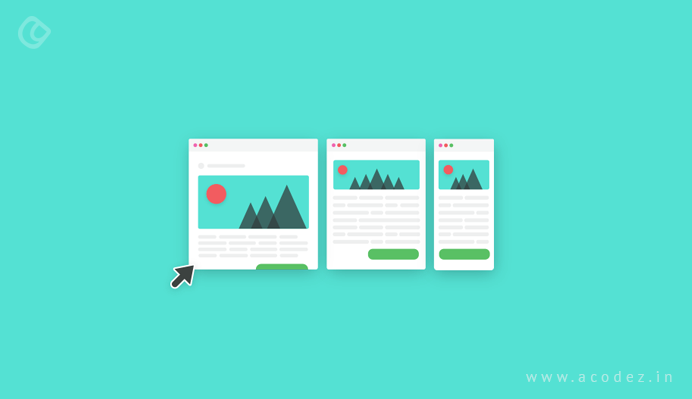
The ability of a website to adjust seamlessly across any device – from a 32-inch ultrawide desktop and 16-inch high-DPI laptop to a foldable tablet or a 6-inch smartphone, utilizing techniques like media queries and container queries to ensure all components and features remain fully functional and accessible, is known as ‘responsive design’. This is the hottest topic in website creation since people have started using laptops and desktops at work or at home, and mobiles and tablets on the go. With the increased availability of Wi-Fi, it has become a common feature. The Responsive Web Design Guide will give you all the important details you need to create a responsive design.
Minimalism
Another hot design topic is ‘minimalism.’ Minimalist design is revolutionizing the web design world. As per the saying, ‘less is more,’ web designers are encouraged more with designing minimal aspects than with stunning curves and colors; clean design with minimum elements, focusing more on the content,t is a welcoming thing among all the gorgeous designs.
Neumorphism
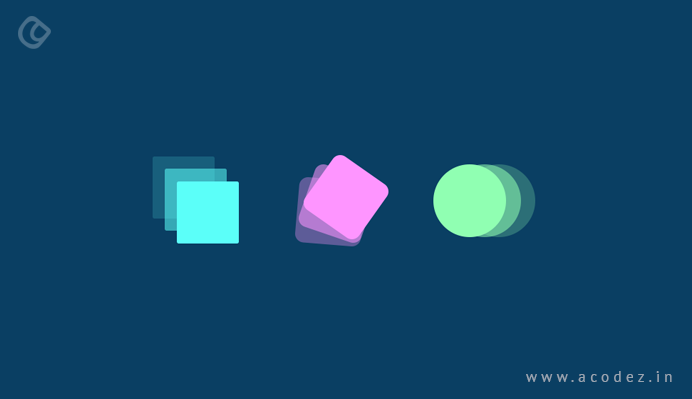
Neumorphism initially gained attention for its soft, realistic visual style; its relevance in 2026 is minimal. Modern designs prioritize clarity and usability over neomorphic visuals, and due to the accessibility and contrast issues, neumorphism has limited usage in modern web design. It is now mostly applied to experimental or small UI elements and is not recommended for full website layouts.
Parallax Scrolling
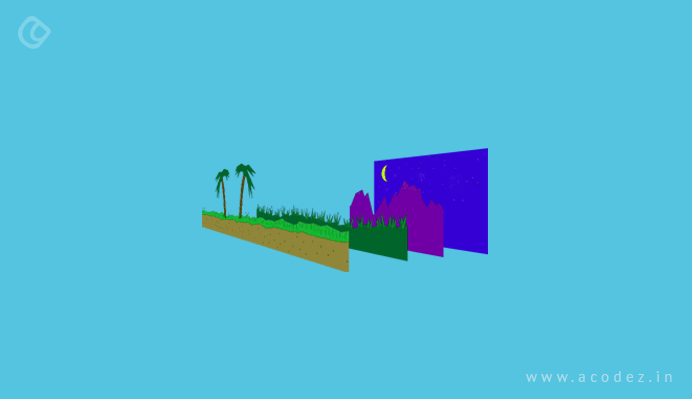
This scrolling effect is getting popular among website owners and designers. The animations take place in various layers, each with different speeds. For example, the background image moves more slowly than the foreground image, creating a pleasing visual treat. There are serious discussions among the web developers about the digging of new web design topics, whether to have this feature or not. Parallax is now used selectively, for landing pages and storytelling sections. Excessive parallax can impact performance, mobile responsiveness, and SEO. When applied strategically, parallax can enhance engagement without distracting users from core content.
This much-discussed feature poses a challenge for SEO. Facebook or Twitter(now X) feeds are exact samples of this type of scrolling. The content gets updated and keeps on loading each time the user reaches the bottom of the page. Web designers have to think twice while including this feature on their website. Infinite scrolling is widely used for content-heavy platforms, but in 2026, it is implemented depending on the content type, user intent, and SEO considerations. Many websites now combine infinite scrolling with pagination or “Load more” options to improve user experience.
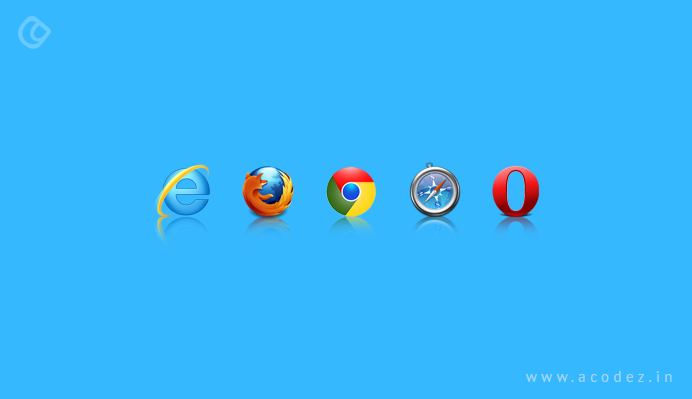
Every client wants to ensure their website is good with all browsers, including older versions. And hence, cross-browser compatibility is the basic thing for any web developer to check and make sure. Cross-browser compatibility is no longer considered a trend but a foundational best practice. In 2026, the focus has shifted to consistent performance across modern browsers, devices, and screen sizes, along with support for accessibility standards.
Typography
It is very surprising to think of this most important topic for website designing neglected so far. Font management is very important because the entire success of a website and its content depends on it. The readability and the legibility depend on the fonts of the website. They set the mood of the user. Some fonts are so neat and clean that they inspire people to read. Some irritate the user, and some make it difficult to read.
Web designers discuss actively integrating animations through CSS, which in turn is a very widely used web design topic. Since web pages depend more on Android and the like, CSS animations are the need of the hour.
Video Backgrounds, the importance of Content, and the question of SEO getting more and more difficult are other topics with regard to web designing.
More Interesting and Impressive Colors
In recent years, there has been a tremendous increase in the application of bold colors, which is mainly implemented across digital platforms. In the year 2024, we can see the use of bold colors again. With the help of some interesting and impressive ways of applying colors, designers will get a number of more options for delivering exceptional customer experiences. Interestingly, we will further examine options to customize and personalize unique experiences for consumers to generate that one spark we always wished for. In 2026, bold and expressive color palettes continue to evolve, with a stronger focus on brand identity. Designers use colors strategically to create personalized and engaging user experiences.
Story Telling
Animated visualizations and data interpretation along the 3D lines are expanding at an unexpected speed. A data that is not very impressive might not be usable, don’t you agree? In fact, the new trend is directed at effective storytelling that flows through designs. This conveys complex information while ensuring that the audiences are engaged throughout. Designers are required to think out of the box if they want to engage newer generations, where bold colors meet minimalist and bold typography, thus searching for top web design topics.
You might be very well aware of the role of augmented reality and virtual reality that are helping to explore the various possibilities of virtual models. Ensure that information is the key focus whenever you start working on a project. Once this aspect has been accomplished, the gap between design and data science will be shortened, allowing the flow of increasing and informative data visualization examples.
In 2026, web design focuses on clear narrative, meaningful motion, and data-driven visuals. Designers use animation, interactive elements, and immersive technology to communicate information effectively while maintaining usability and performance.
Flat Design 2.0
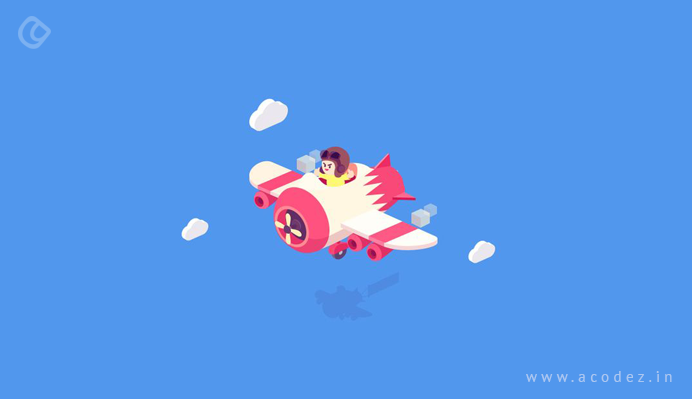
People have been worried about the fading trend of Flat designs. It has been renovated, and the new version is referred to as Flat 2.0 or semi-flat design, which relies on toning and adding depth to its identity. This is accomplished by implementing gradients and shadows. To achieve this, you can use professional editing tools, in-built editing tools inside Instagram growth tools or even Canva. If you have observed, you might have understood that brands like Stripe, Instagram, and even Apple’s iOS icons have been playing a starring role in high-profile redesigns. This applies to companies, such as Mastercard and Dropbox. A new phase has been launched within shadows with the improvisation across web browser functionality. As of 2026, flat design 2.0 is no longer an emerging trend but a standard practice. Flat designs continue to evolve, balancing visual clarity with modern aesthetics.
It doesn’t need a mention here. AI has taken up all arrays of the web sphere and is expanding at a high speed with no intention to turn back. Finally, we can see some good days coming with less manual effort on monotonous jobs, so that the manual effort can be employed on other, more important tasks. By 2026, artificial intelligence will have become an integral part of web design and development. Designers are leveraging AI tools to create highly personalized, optimized, and automated content to enhance user experience.
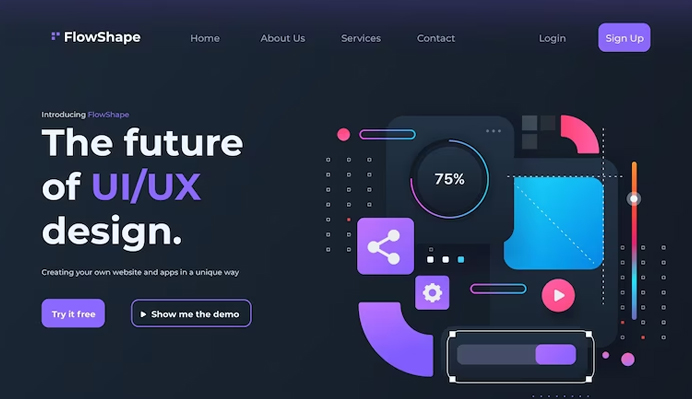
The dark mode is now available on many social media platforms, such as Instagram, YouTube, etc. While using dark mode, many users find it easy and less straining to read light text with a dark background, and it also helps in extending the battery life of the tablet or smartphone, which is like an added benefit. Dark Mode makes it better and simpler to experiment with design elements,s which further lets the designers flourish their creativity a bit more than usual. In 2026, dark mode is a standard design option, implemented as part of adaptive system designs that support both light and dark themes. Designers focus on accessibility, contrast, and seamless switching between light and dark modes.
Organic Shapes
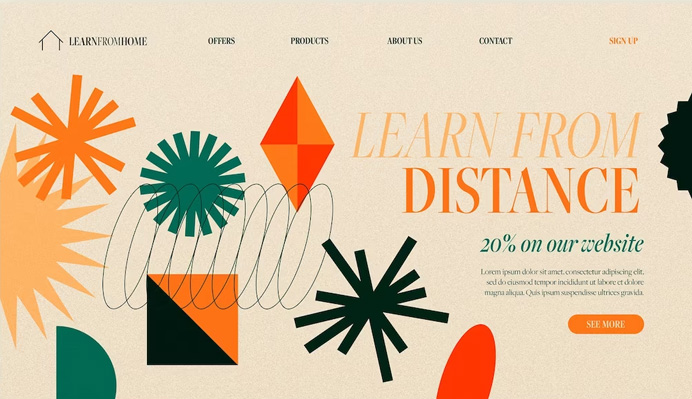
Organic shapes are one of the latest and most popular web design trends. The recent web design is all about organic or fluid shapes, which, if added to the content, will only add personality to it without distracting the users from the content. Not to mention the minimal practice it creates gives the website a classy touch. Prominent web developers and web designers prefer organic shapes, which could be asymmetric shapes that might be inspired by natural components such as mountains, rivers, etc. In 2026, organic shapes are used to soften layouts, improve visual flow, and create more human-centered digital experiences.
Thumb-Friendly Design
According to research majority of website traffic comes from mobile devices, and this led every designer to come up with mobile-friendly websites. But, isitjust being mobile-friendly enough? Of course, not. When you look at your own way of using mobile, you will see the majority of the tasks are done by your thumb finger – in such cases, the websites need to be thumb-friendly. Buttons, icons, and menus should be designed in a way that can be easily accessed by users’ thumbs. In 2026, thumb- friendly design is considered a core part of mobile UX, with emphasis on reachable navigation, bottom-aligned controls and ergonomic interaction.
Augmented reality (AR) is one of the new technologies that helps to improve user experience. It helps in connecting computer-generated content or images with elements of the real worl,d such as filters and stickers in Snapchat. The recent progress in technology has led brands to incorporate AR elements into their website. Speaking with an example – Lenskart.com uses virtual-try-on to help their users to find the right shape and size spectacles before placing an order – this not only boosts user experience but will also reduce the number of returns by customers due to dissatisfaction. By 2026, AR is widely integrated into web design across multiple industries, including e-commerce, real estate, education & training, product visualization, and entertainment & marketing.
Micro Interaction
Microinteraction is designed to improve user experience and brand awareness. These are small animations that add up delight for users with their experience. Usual website interaction includes link clicking, posting comments, filling out surveys, etc.- With micro-interaction, very little input is required from users, which leads to improved user engagement and ensures users can navigate the website without encountering errors. For example, when a user’s mouse moves into a link or button, the color of it changes to let them know they can click it. Or a progress indicator, which is commonly used on pages that require users to fill out a form. As the user completes each task, the progress indicator moves right to let them know the website is responding to their input.
Monochrome
Monochrome means one colour, and when it comes to web design, monochromatic design refers to using one colour and its different tones, shades, and tints. This design creates a sense of unity and simplicity throughout the website. It also improves the user experience by enhancing readability and reducing visual distractions. A monochromatic colour scheme helps create a brand identity associated with the colour
Conclusion
Web design is constantly evolving, driven by technologies, changing user behaviors, and growing business requirements. Techniques that worked well years ago may have become outdated, and trends popular now might not suit websites of the future. As 2026 nears, focus moves beyond looks; successful web design prioritizes a balance between visual appeal, usability, performance, accessibility, and purpose. Today, a great website demands more than charm. It needs to operate across devices, load rapidly, remain easy to use, and provide a pleasant experience.
Trends like minimalism, responsive design, AI- powered features, dark mode, and immersive experiences like augmented reality add value when used with intention. Not every trend needs to be followed. The best results come from choosing the best design elements that suit the purpose, target audience,e and goals of the website. In short, good web design is all about balance. When creativity, usability, and performance come together, websites don’t just look good; they work better.
Acodez IT Solutions is a web design company in India offering all kinds of web design solutions ranging from carousel sites to the ultra modern sites that only a few of the multi-giants have. We are also a SEO agency based in India offering all kinds of SEO and inbound marketing solutions to our clients. For more details, you can visit our website or contact us.
1. Do website trends change every year?
Yes. Website trends change every year due to new technologies and changing user behaviour. However, the core principles like usability and accessibility remain unchanged.
2. Is Augmented Reality (AR) useful for websites?
Yes. AR is useful for websites as it offers features like virtual try-ons, 3D product previews, and interactive demos that help users understand products better. This is beneficial for e-commerce and real estate websites as it improves user confidence and reduces returns.
3. Are animations good or bad for websites?
Animations are good when used carefully. Small animations can improve user engagement, while too many can slow down the site.
4. How often should a website be redesigned?
A website should be reviewed every 2 – 3 years. Performance improvements and small updates can be done regularly.
Looking for a good team
for your next project?
Contact us and we'll give you a preliminary free consultation on the web & mobile strategy that'd suit your needs best.
Rajeesh P.K. is the Director and Creative Head at Acodez . With an experience of 10+ years in UX Design & User Interface Design, when coupled with his expert coding skills in HTML5, CSS3 makes him one of the top UX Architects in India, with more than 15 international awards to his credit.
That is very interesting, You’re a very skilled blogger.
I’ve joined your feed and look forward to looking for
more of your great post. Additionally, I’ve shared your site in my social
networks
Really awesome! A very informative post that contains a bunch of knowledge about web designs. I will agree with you that fonts are very important for web designs. Keep up the fantastic piece of work!
After reading your article I was amazed. I know that you explain it very well. And I hope that other readers will also experience how I feel after reading your article.




Thanks for sharing this website.very nice information for web design topics. really wonderful ideas.thank you so much……
That is very interesting, You’re a very skilled blogger.
I’ve joined your feed and look forward to looking for
more of your great post. Additionally, I’ve shared your site in my social
networks
Really awesome! A very informative post that contains a bunch of knowledge about web designs. I will agree with you that fonts are very important for web designs. Keep up the fantastic piece of work!
Thanks.
After reading your article I was amazed. I know that you explain it very well. And I hope that other readers will also experience how I feel after reading your article.